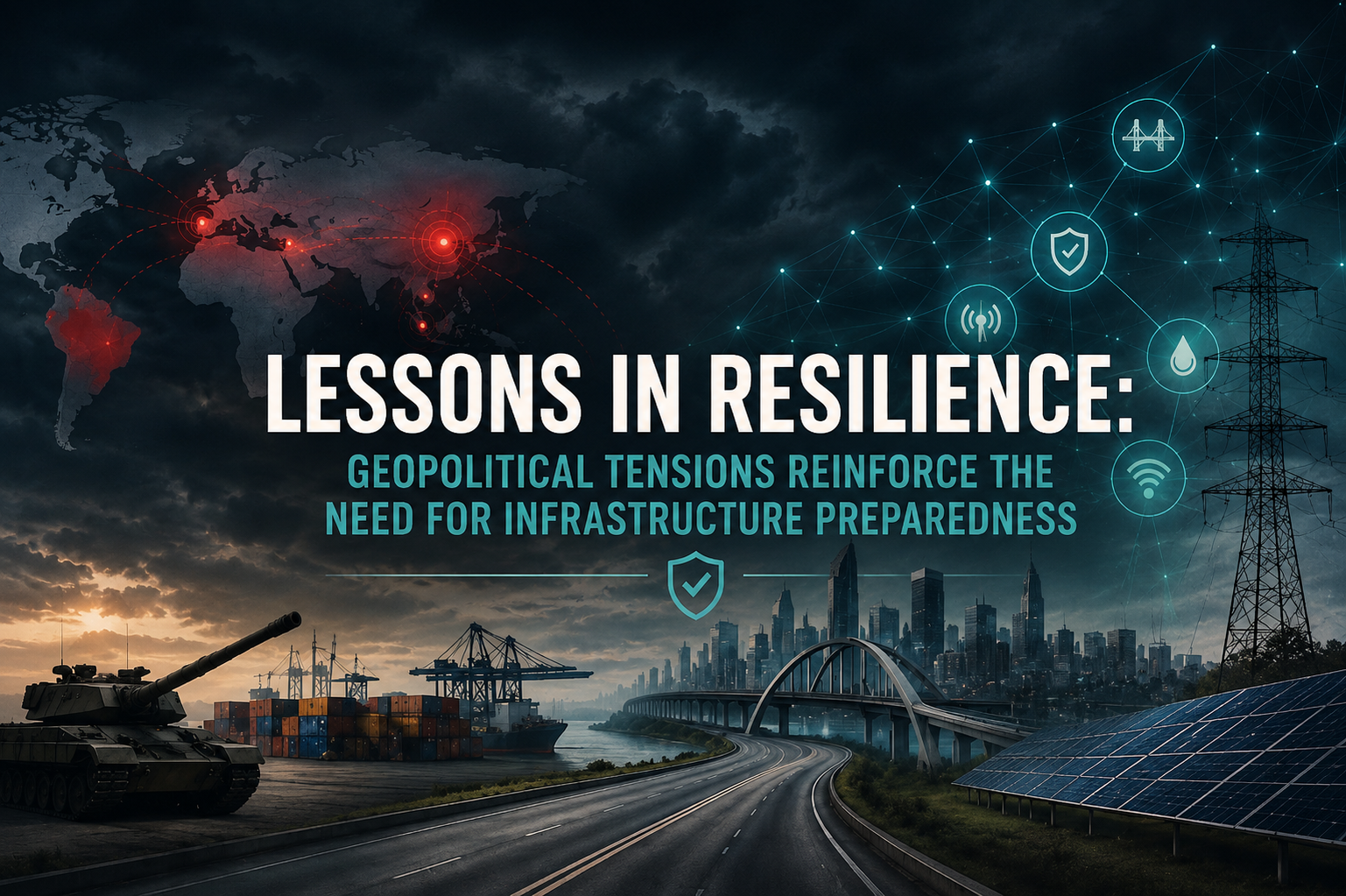
Recent events in the Strait of Hormuz, including the attack on a commercial cargo vessel transiting an alternative maritime corridor during the Iran conflict, serve as a reminder of how quickly geopolitical instability can disrupt global trade and critical supply chains. Even temporary disruptions to one of the world’s busiest shipping routes can affect the movement of fuel, food, equipment, and essential resources, exposing the vulnerability of centralized logistics and infrastructure.
These events highlight an important lesson: resilience begins long before a crisis occurs. Communities, industries, and governments can no longer rely solely on long supply chains and centralized infrastructure for essential services.
Decentralized solutions such as mobile water infrastructure, renewable energy, and deployable sanitation provide an additional layer of preparedness, enabling critical services to continue when conventional systems are disrupted.
The Trinity Platform™ was conceived around this principle—not to replace existing infrastructure, but to strengthen resilience, improve preparedness, and ensure that access to safe water remains available when it matters most.